
Find It, Draw It, Change It: How a Picture in Your Mind Shifts a Feeling in Your Body
You open the news. Somewhere there's a war, somewhere else someone has been murdered. As you read, your body stiffens, your head tips forward, your shoulders sink.
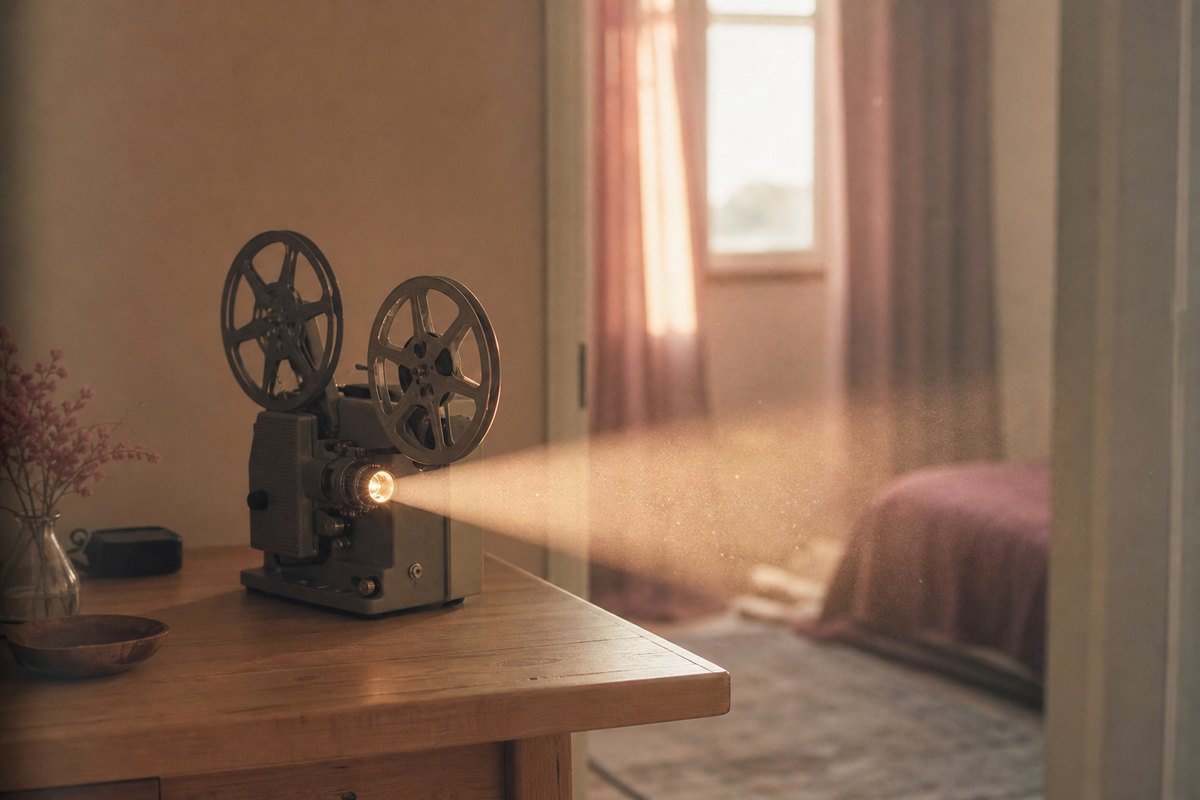
That's because the mind is like a screen. Whatever is projected onto it has a direct effect on how you feel.
I've been working with the mind for over twenty years, and it's my passion. I've spent thousands and thousands of hours exploring it, and again and again I've seen for myself how powerful the pictures running through our heads are. I've also found that the mind is far more playful than we think.
And once you know that, you have a wonderful chance to work with it to your advantage. You don't need to calm yourself down in any special way or meditate. All you have to do is play with your mind and use what it already does on its own.
I'll show you how, using the feeling of overwhelm, of having too much on your plate. Maybe you don't feel it right now, or only a tiny bit. And maybe it's huge.
Find it and draw it: where overwhelm lives in you
Try answering silently: where does that feeling live in you? Take the first thing that comes to mind. Body and mind are connected, and the mind keeps giving you feedback about what you're going through.
Don't look it up in a psychosomatics textbook to see where it's supposed to be. All that counts is where you actually feel it. One person will have overwhelm in a knee, another in the lower back, someone else in the shoulders. I have it around my head, like a helmet.
Just by becoming aware of the feeling, you pull it out of the sea of all the different feelings that blend inside you. You look at what it is, and suddenly you're holding it in your hands. And whatever you hold in your attention like that, you can work with.
If you still don't know, make it up. Tell yourself, for example, that overwhelm might be in your stomach. There's no wrong way to make it up. No one has the right to tell you how to play with your own mind. If you make it up, it'll follow your rules.
Now give the feeling a form. If you had to draw it, what would it be? Pick up a crayon in your mind, maybe a black, a dark green or a brown one. I'd draw a scribbled, slightly scruffy helmet.
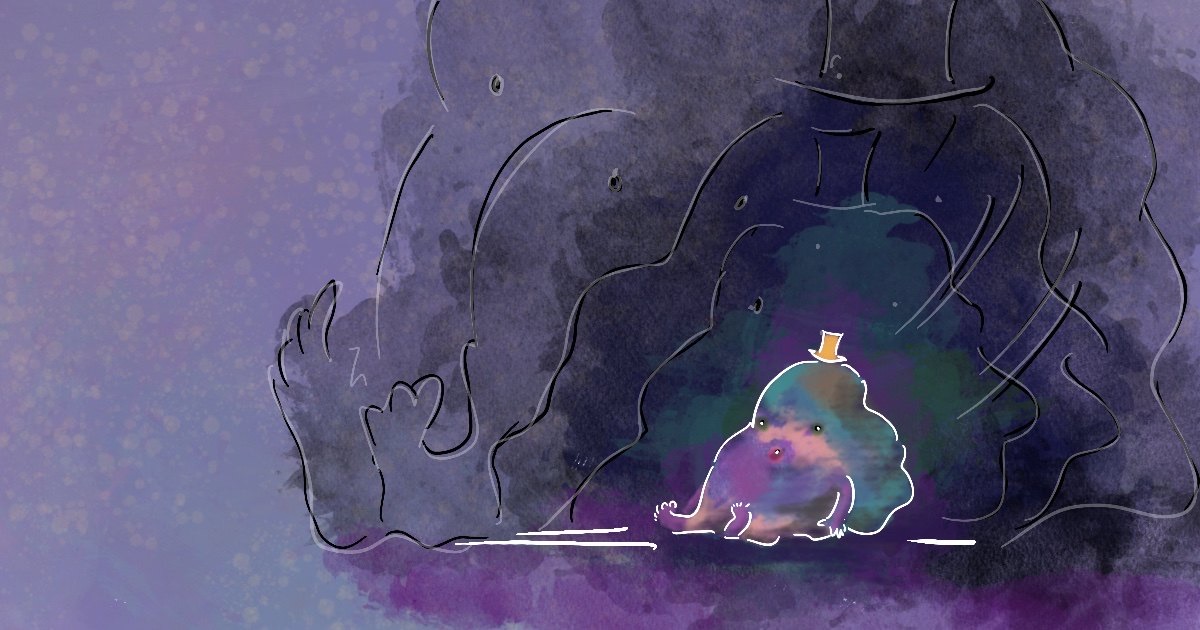
It was your own mind that pulled up the picture you just saw. Everything you've lived through, today and over your whole life, leaves its mark on it, and so do your relationships and your subconscious programs. But you don't need to analyze it at all. It's enough that you have it. You look at it, and the feeling starts to have a face.
Then add a little detail. My helmet is gray, a sort of grayish, brownish white. Now look at your own picture and notice its color, how soft it is, how warm or cool, and whether it moves. There's no wrong answer, so just play.
Change it: the mind is a small child with modeling clay
This is where one of the mind's loveliest qualities comes in. It's like a small child who's been given modeling clay. Mom hands the child a little figure, and the child goes squish, squish, squish. Suddenly it's a ball, then a tank, then a little bow or a heart. The mind never gets stuck on one creation. It keeps reshaping it.
So ask yourself what you'd like to do with your picture so it isn't there anymore.
In the mind, the laws of physics don't apply, and the only limit is your imagination. If your overwhelm is a pile of rocks, you don't have to lug each rock away one by one. Just imagine tossing them into a ravine, plop, plop, plop. Or let them burn up.
If it's an object, cut it into strips and throw it in the trash, or let it dissolve. The crazier the idea, the better it works.
I crack my helmet in half like a nut and toss it on the trash heap. The picture can also turn into something beautiful. That's up to you. You don't have to do it with your hands, but you can.
Care for that place and name the new feeling
Then come back to that place in your body. Maybe the feeling there has changed just a tiny bit, maybe quite a lot. And maybe that place would like to be stroked, soothed, warmed, massaged or rubbed with some wonderful balm.
I imagine stroking my head with a balm full of tiny seeds. Flowers grow out of them, and I have a beautiful meadow on my head.
Care for that place however you like. No one's judging. The only point is for your feeling to change, and what others think about it doesn't matter.
Close your eyes and just sense that place for a while. I can feel how light my head is and how the flowers are drawing it upward.
Finally, give the new feeling a name. One word is enough. Where there was overwhelm, now I have lightness. If nothing changed for you, that's all right. Playing with the mind is a skill, and skills can be practiced.
Joy as a dancing little flame
With the helmet, we practiced changing an unpleasant feeling. Let's try it the other way around, too, and find a place where you feel good.
Where in your body does joy live? Don't think about it for long, your body will answer right away. One, two, three, and there it is.
Mine is in my heart. Yours might be in your little toe, in your chest or maybe in your eyes. It doesn't matter where someone else would feel it, or what psychosomatics says. In that moment, the feeling is the truest thing we have.
Give joy a face, too. Take a crayon and draw what it looks like. My joy is a dancing little flame, orange and yellow-red, quite energetic. It dances, and as it moves it paints swirling patterns on the dance floor.
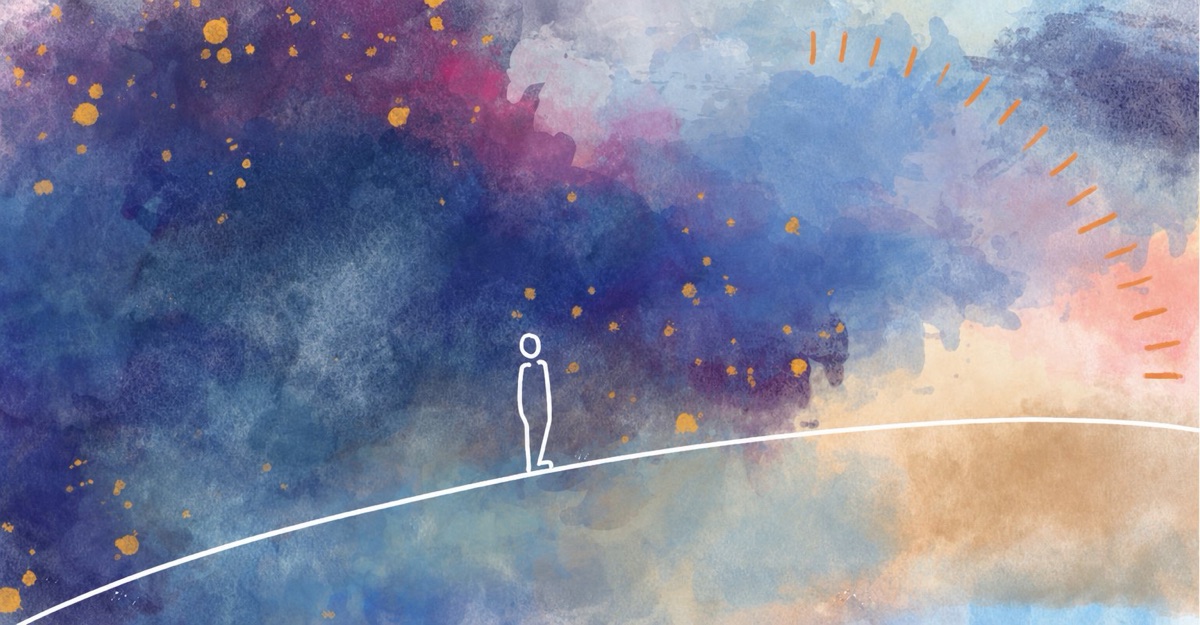
It's fine if it's a child's drawing. The pictures we loved as kids stay close to our hearts and still speak to us somehow. Even in a grown-up body, it's perfectly fine for these things to be childlike. Of course, a grown-up picture works just as well. Nothing gets judged here: whatever yours looks like, that's simply how it is.
Close your eyes and spread the feeling from that one place into your whole body. It can stretch like a rubber band or shine like light into every corner, until the joy wraps around you completely.
How do you feel now? I feel a beautiful, vibrating calm. Not a giddy joy, but the deep, inner kind.
So first we changed an unpleasant state, and then we made a pleasant one bigger. You could play with your mind like this forever.
The rules of the game
Here are a few rules to take with you from both exercises. They'll come in handy whenever you play with your mind.
- You can't get it wrong. Any part of the body that comes to mind is right. Sometimes it doesn't even have to be in your body, but just outside it, in your aura, for instance.
- When you don't know, make it up. It's a legitimate way to play with the mind. Making things up is what the mind does, after all.
- Don't judge or interpret the picture. Whatever shows up shows up for a reason. You could take it apart and tell yourself it means this and that, but that would pull you out of feeling and into your head, which puts everything in boxes. It's enough for the feeling to change. And if it doesn't, that's okay. You have the whole rest of your life to explore it.
- The crazier, the better. The laws of physics don't apply here, and childlike pictures are fine.
- Say what you want to happen. The mind works with pictures. If you say "don't let it leak," you show it a picture of leaking, maybe crossed out, and your attention goes to it anyway. So picture what you want.
You're the one at the projector
During the game, you may have noticed that you really are the one directing those pictures.
You're the queen (or the king), giving orders to your subjects: your body, your thoughts and your emotions. You have the right to change them when you decide to. There's nothing above you here, no authority playing movies in your head that you don't want to see.
The moment you realize this, you stop being the audience member sitting in the movie theater, watching your own life play out on the screen. You move to the back, to the projector. You can still see what's happening on the screen, and you can change it. You turn a tragedy into a romance, a comedy or a documentary. You're the director.
Of course, the subconscious throws its own survival programs into the mix, and it isn't simple. You can't control it twenty-four hours a day. But with a lot of things, you can.
Sometimes a picture doesn't want to change. Then it's usually because you don't want to get rid of it yet. You are the queen, after all, and when you give an order, your subjects obey.
They disobey in only one case. You stand on the balcony and give a speech declaring that from today on, everything will work in harmony. But behind your back, through messengers and maids, you send one more note, a secret one, to the people below. It says: "Don't listen to what I'm saying, it's made up. In truth, I don't want to let it go."
Behind the secret note there's usually fear. You're a little afraid of what it'll be like when you feel better, or when the problem is gone. And as long as your subjects keep getting the note, they can't carry out the order from the balcony.
And it's perfectly all right if that's how it is for you. Everything you're working through inside needs its own time, a certain quality of time when you can let it go or transform it. Maybe now just isn't that time.
Where the game ends
Playing with a picture changes a feeling, but it doesn't replace a doctor or a therapist. When something hurts or has been troubling you for a long time, it belongs in their hands.
Life knocks us out of harmony now and then, and that's natural. But inside you there's a wise mechanism that can bring you back to it.
If this calls to you
In one of my webinars, I followed this warm-up with a longer guided practice. We went through five elements (fire, earth, water, wind and sky), and for each one we looked for the place in the body where it lives. I called it mental acupuncture, though I could just as well have called it something else entirely.
It makes no difference at all whether we call it acupuncture or use the names of chakras or elements from Chinese medicine, Ayurveda or Zen. It's still the same game. Words are only vehicles that help the mind picture the content. What matters is the cargo they carry.
It really saddens me that nobody told us this when we were little. We hold the reins of our own mind, not all the time, but most of it. And it's never too late to start playing with it.
When I first discovered what a playful tool the mind is, I became practically obsessed with it and kept making up games like this all the time. These days I play when it occurs to me. But it still surprises me how creative the mind is and how much it shapes the way we feel. We take it with us everywhere, so why not play with it?
Feel free to start today, with a single feeling. And if you'd like to go further, the basics of mental harmonization, the method this game comes from, are in my free eBook A First-Aid Kit in Your Head. The English edition is almost ready, and you'll be able to download it from that page soon.
Tereza

 The Little Wild Girl Inside You: Who Really Decides When You Decide
Inside each of us lives a little girl with one essential job…
 Even One Drop Counts: Forgiveness You Can't Force
Forgiving doesn't mean telling the other person it was okay. It's a…
 Your Mouth Isn't for What You Think
Panic first, then the best sleep in ages. What happens when you…


