
Even One Drop Counts: Forgiveness You Can't Force
Some hurts never get filed away. They don't sit in the archive of memories, on a shelf labeled January 12, 2003, neatly between the eleventh and the thirteenth. They're still lying on the nightstand.
Or you carry them in your purse. You haul that bundle of old files around every day on your right shoulder, and that shoulder now sits lower than the left one because of it.
When you go to bed at night, you don't fall asleep feeling calm and clear. Next to the bed you see that huge stack of unprocessed documents again. And on your computer, you have them open on your main desktop. Even when you're not thinking about them, they bother you and nag at you.
We carry them with us because we feel that if we filed them away, we'd be telling the other person it was okay. As if we were giving them permission: you're allowed to do that. And they'd get off easy.
But that's a mistaken idea. Who suffers because of it? Not the other person. I'm the one who suffers. I have an energy knot in my system, as if someone had jammed a stone right where energy is supposed to flow.
Forgiving isn't excusing
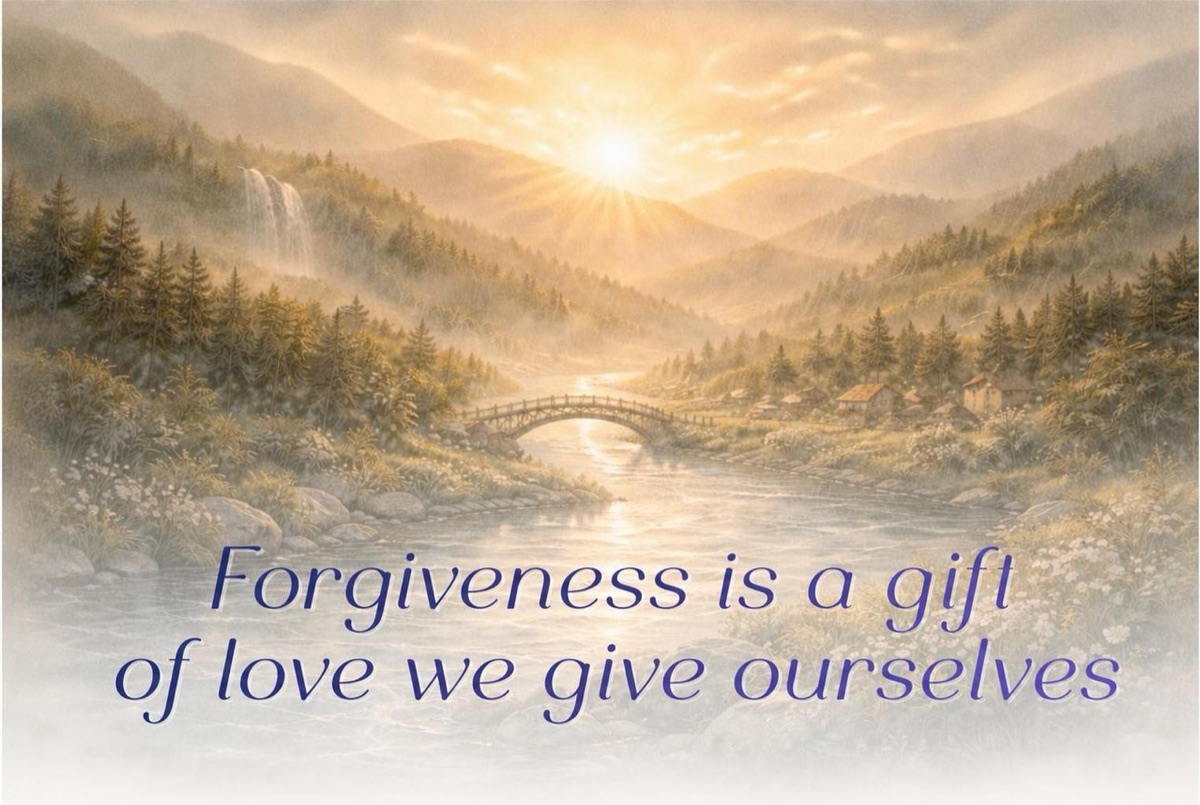
Forgiveness, the way I see it, in no way excuses how the other person behaved. Nor does it mean you condone what they did. It's a gift of love you give yourself, so you can set yourself free and get relief from that burden.
That sounds poetic, but I mean it in a completely practical way.
Energetically speaking, there's a thread stretched between you and the person who hurt you, a kind of tie. You can picture it as a leash, with that person on the other end. You'd rather not even see them. But until you can let go, you keep dragging them back into view on that leash.
So we walk through life like someone holding a whole fistful of leashes, dragging along everyone we haven't been able to forgive. Picture it, and you can feel how heavy that is, what a load to drag around.
That's why, for me, forgiveness is the greatest act of self-love. I let go of the leashes, leave them lying on the sidewalk and step forward lightly.
Twenty years with my dad
Each of us has lots of things to forgive. Some are tiny specks, others are huge. My biggest was probably my dad.
He was a bit of an adventurer. When I was seven, my parents divorced, and after that I didn't see him for a long time. Later I tried to help him, and somehow it always backfired on me. A lot of pain built up inside me.
From the moment I got my first taste of personal growth, I knew my dad was the thing I had to work through. But it wasn't that clear-cut. So many times I felt I had already forgiven him, and then it turned out that wasn't quite true and that the sensitivity was still there.
Forgiveness is a process, and it's all right if it comes in layers that you peel away one by one.
I started forgiving him when I was about twenty, and it took another twenty years. Only once I had all three of my kids and could look at his life story from a distance did I realize the slate between us was clean.
The things that had happened no longer stirred up bitterness in me. They belonged to the past, and I didn't need to remember them or cling to them. I felt free, with him and with my own story: the story of Tereza, the girl who grew up without her dad. I felt enormous relief, and a way opened up to really help him, without it backfiring on me.
It was near the end of his life. I arranged hospice care for him, said goodbye to him and took care of what needed doing. And I read him my book, The Girl with the Raven Wings. I felt that for the first time, he was hearing who I really am.
Then he was able to pass away in a calm, loving setting, and I felt that something between us had healed beautifully.
Forgiveness or self-betrayal?
After he died, I spent about two more years sorting it out inside myself, and I came to see how fine the line is between forgiveness and self-betrayal.
It's one thing to forgive because I feel it and I've grown ready for it. It's another to do it because I'm supposed to, without feeling it. When I manipulate myself into forgiving, I betray myself.
The body as a map of unforgiveness
Every situation that hurt you carries some kind of charge. Sometimes it's small, say when a friend doesn't show up for the coffee you'd planned. Other times it's big: a real betrayal.
When we don't manage to let a hurt go right away, or within a week, say, and we keep thinking about it, it gets written into the body. As if the body were a bulletin board we keep pinning notes to. For one person it settles in the stomach, another has tight shoulders, someone else feels it around the heart or in the lower belly.
And each of us has different sensitivities and a different Achilles' heel. For one person, a friend not showing up leaves no mark at all; for another, it really hurts.
In psychosomatics, you could look into which emotion sits in which place. But I don't think we even need a one-size-fits-all map like that. It's a little different for each of us, and we can sense it for ourselves.
And it isn't a one-to-one thing. It doesn't work like this: I didn't forgive my friend for not showing up, so my knees will hurt for the rest of my life because that's where it happened to settle. It builds up bit by bit, drop by drop, like the pebbles I carry in my bag.
I know I'm simplifying. Unforgiveness isn't the only trigger, and maybe we don't even need to say it causes anything. If anything, it feeds an imbalance in which energy stops flowing.
No straight A's required
Forgiveness can't be pushed through by force. You can't will it into being or stamp your foot until it happens. It's a deep dive into yourself and a humble turning toward your source. Along the way, you look for the courage and the willingness to let the other person go and to give yourself freedom, too.
We forgive out of understanding. When we step back and see where the other person was coming from, why it happened and what it did to us, we can feel that it's time to let go. We don't forgive because we've made up our minds to, or because we've repeated affirmations about it.
And each of us forgives as much as we want to. Nobody expects you to let go of everything, a hundred percent, right now. If you manage five or twenty percent, well, that's wonderful. It isn't homework you'll get graded on.
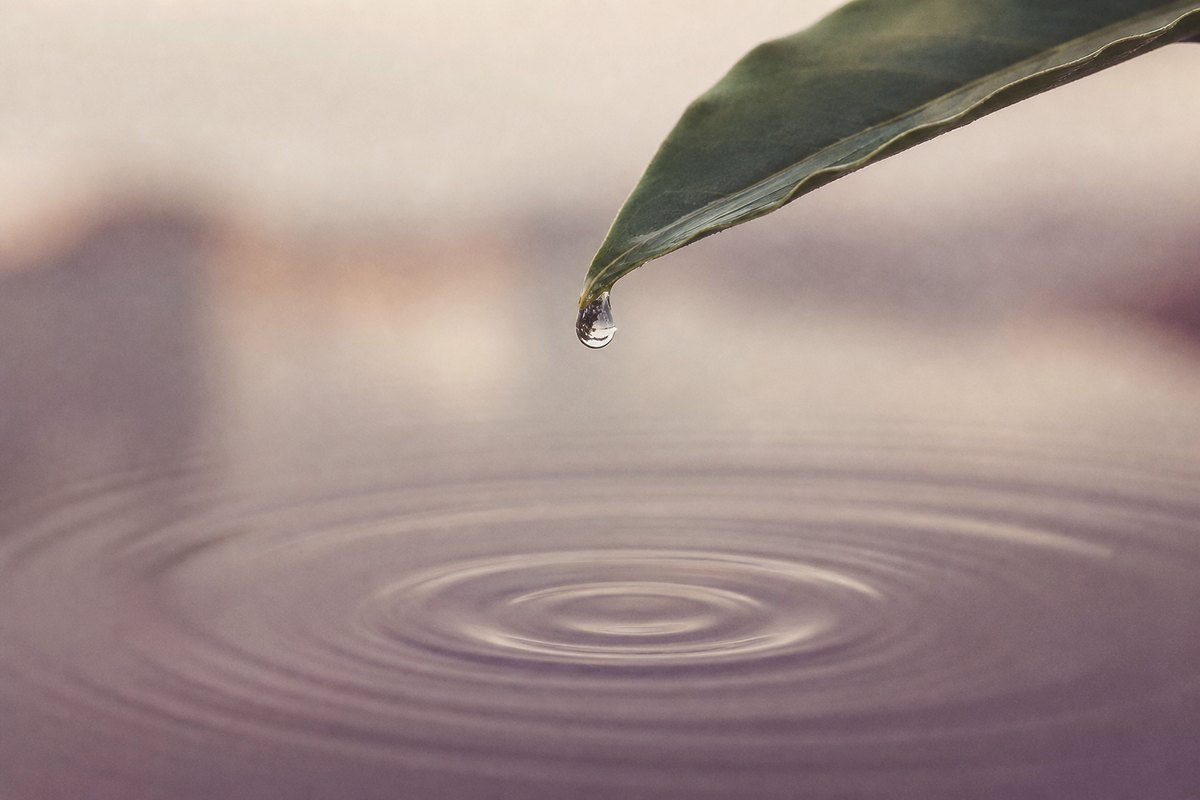
So please, don't push yourself. Even one drop, even half a percent you release from the tank where the unforgiveness has collected, brings relief and gives your whole system a lift.
Letting the pain drip away, step by step
This technique is kind, soft and tender. It doesn't assume you have to forgive, let alone completely. If you just want to test the waters, or you sense it isn't ripe yet and you still need to digest it, I won't push you into any big acts of forgiveness. That wouldn't feel fair to me. It's a gentle first step, and it may show you whether it's ripe yet.
First, find where it lives
- Sit comfortably with a straight spine and tuck your chin back slightly so it isn't jutting forward. Close your eyes and notice that you're here, in this moment, and that this is about forgiveness.
- Ask yourself: Where in my body is the energy of unforgiveness concentrated? Catch the first answer that comes. There's no wrong answer. It sits in a different place for each of us.
- If you don't know, ask: If I did know, which place would it be? And if nothing comes even then, make it up. That counts too, because your mind will choose the most likely place.
- Take a good look at that energy: its quality and color, how dense it is, its temperature and how it affects your body.
- Smile at that place, just lift the corners of your mouth a little. And thank yourself for having the courage to see it. It was there yesterday, the day before and a month ago, but now you can see it. The very fact that it showed itself to you is a huge gift from your subconscious, which trusts you.
- If you can reach that spot, gently run your hand over it. You're showing that you treat yourself with love and that you're worth it.
Then let it go, drop by drop
- Sit with a straight spine and put your feet on the floor. If you can, take off your shoes or slippers. Close your eyes.
- Bring your attention to the place where your unforgiveness lives. Lay your palm on it, or both hands if you can reach, and breathe into it.
- Imagine its color and consistency, whether it smells sweet or foul, whether it's clear or sticky. If it doesn't come on its own, make it up. It still works.
- Begin rocking gently from side to side, the way a baby rocks in a swing or in its mother's arms. Tiny movements are enough, so small no one could see them from the outside. The energy starts to rock along with you.
- You may become aware of which people and situations it's connected to. Ask: Is it time?
- Try letting go of one drop. Let it slide down through your feet into Mother Earth, who knows what to do with it. How do you feel now?
- Keep rocking gently and let go of another drop. Then a third, or more, as many as you want and feel able to. It's your energy system, and it will go the way you want it to.
- Smile at that place and thank it for showing itself to you. Notice what's different now. If it feels good, imagine your life energy, or the glow of your spiritual heart, kindly shining through it, just as much as feels right for now.
- Stop rocking and take three deep breaths into that place. Send it a conscious inhale and a conscious exhale, as if the exhale combed everything smooth and settled it.
At night, you can set an intention for this slow release to continue while you sleep, every evening if you like. It's a process that can run for a long while, and it will most likely need that time.
What forgiveness doesn't ask of you
What I write about the body is my view, not a diagnosis. If something in your body troubles you, forgiveness won't replace a doctor.
Hurts carry different weight, from someone cutting in line to betrayal to wounds so deep they're almost unforgivable, abuse, for instance. I'm not saying everything can be forgiven. Each of us has to find that out for ourselves. There's no need to force yourself into forgiveness that isn't ready yet.
Forgiveness doesn't do away with boundaries, or with justice in the world, either. When a wrong has been done, it's clear that boundaries need to be set and justice needs to be done. Letting go of the pain doesn't mean letting someone keep hurting you. I'm talking about the level of the soul. There, you don't need to make sure that person gets what's coming to them or comes to understand something.
On that inner level, it isn't your job to see that justice is done. Holding on to resentment is like drinking the poison myself instead of handing it to the other person.
I believe you and I aren't the kind of people who hurt others on purpose. But nobody gets through life without hurting someone, disappointing someone or setting a boundary that someone finds unpleasant. And still, we're good people.
If this calls to you
Letting the pain drip away is a beginner's technique, and it's a good place to start. You can come back to it whenever an old hurt stirs again: work through it for one person, and later perhaps for someone else.

Maybe you've already worked on this in your own way and have your own methods. That's completely fine, too.
Tereza

 Three Acts of a Tangled Relationship with My Dad
Two years of silence with my dad, one simple NLP technique, and…
 The Little Wild Girl Inside You: Who Really Decides When You Decide
Inside each of us lives a little girl with one essential job…
 Find It, Draw It, Change It: How a Picture in Your Mind Shifts a Feeling in Your Body
The mind is like a small child with modeling clay, always reshaping…


